
Feel the rhythm of the road disrupting your music or conversation? Trunk sound insulation might be the unsung hero you never knew you needed. Picture this: you’re cruising down the highway, the sun setting on the horizon. Instead of enjoying your favorite playlist or serene silence, you hear the constant hum and rattle of your vehicle’s trunk. This often-overlooked aspect can greatly alter your driving experience. Venture into the world of soundproofing to find strategies that can improve your drive. From simple DIY fixes to comprehensive solutions, trunk sound insulation can redefine your time behind the wheel. With the right approach, your car becomes a sanctuary of peace and quiet. Say goodbye to distractions and hello to a more harmonious drive.
Understanding the Importance of Trunk Sound Insulation
Recognize that road noise can turn a pleasant drive into a tiring ordeal. Gravel, tires, or engine hum often enter through the trunk. By focusing on trunk sound insulation, you address one of the main paths for noise. Better insulation keeps outside sounds out, allowing your stereo, podcasts, or peaceful quiet to come through clearly. Consider how a well-insulated trunk also protects cargo and reduces rattles. Loose items can vibrate against panels if there’s no soundproofing layer. Adding insulation cuts down on noise, cushions items, and prevents damage. Over time, this small improvement delivers a more comfortable ride and preserves both your hearing and belongings.
Assessing Your Trunk’s Current Sound Insulation Status
- Conduct a test drive on a highway or gravel road with steady noise.
- Notice rattles, humming, or road rumble coming from the rear of your car.
- Check inside the trunk for bare metal panels, loose screws, or trim gaps.
- Use a flashlight to spot openings where sound can slip through.
- Inspect under mats or carpeting for thin padding.
This inspection helps map where trunk sound insulation is needed most and guides you to areas requiring immediate attention.
DIY Trunk Soundproofing Techniques
Apply simple methods before investing in expensive kits. Start by lining the trunk floor and sidewalls with thick rubber mats or old carpets. Cut them to fit snugly and use strong adhesive spray to keep them in place. This basic layer blocks mid-range noise that travels through sheet metal. Try adding foam or fabric strips around edges of the trunk lid and hatch. These materials cushion panels and seal small gaps. Foam tape along seams also reduces rattles. DIY trunk soundproofing is an easy way to test materials, learn what works, and gain experience before moving on to professional-level products.
Choosing the Right Soundproofing Materials
- Closed-cell foam is lightweight and fits odd shapes.
- Rubber mats block low-frequency noise effectively.
- Butyl sheets dampen vibrations and stick firmly to metal surfaces.
Balance cost and performance to match your needs. If tire hum dominates, rubber mats may suffice. For louder engines or highway driving, combine foams and butyl sheets. Always cover the entire trunk, including floor, walls, and lid inner surface.
Professional Trunk Sound Insulation Services
Seek out local car audio installation in San Leandro or auto detail shops offering soundproofing services. Experts carry high-quality materials not available to consumers. They also apply insulation precisely around curves, beams, and tight spaces. Certified technicians understand vehicle acoustics and recommend the best materials. They can apply multiple layers and seal every gap. While labor adds to the budget, the result is a cleaner finish, longer-lasting adhesion, and guaranteed performance. For more guidance, explore our car audio system planning page for tips on integration.
Installing Sound Deadening Mats in Your Trunk
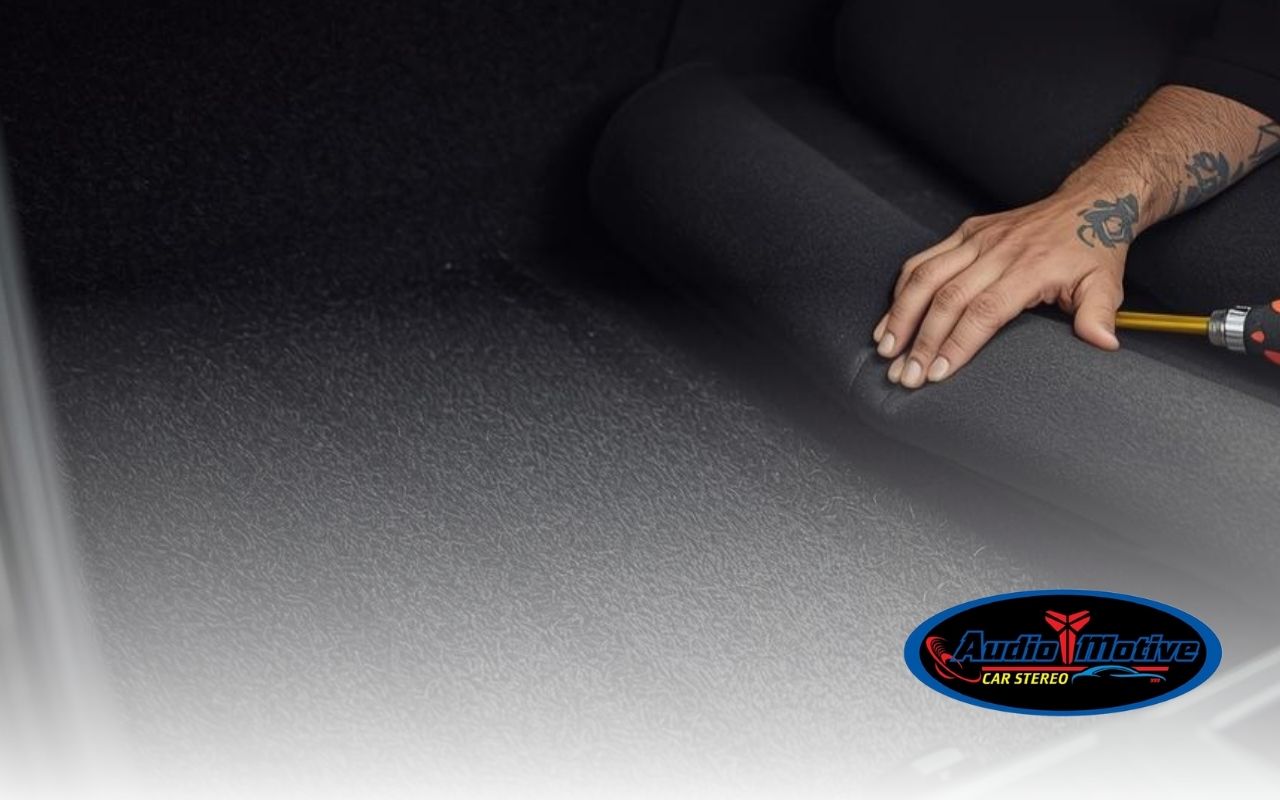
Place mats carefully on bare metal surfaces. Start with the floor, trimming each piece around wheel wells and braces. Peel off the backing and press mats firmly, working from one edge to avoid air pockets. Use a roller or heavy object for full adhesion. Press mats onto the trunk lid and sidewalls next. Trim mats in small sections and heat slightly with a hairdryer to bend around corners. A tight fit stops vibrations and keeps outside noise away.
Sealing Gaps and Cracks for Enhanced Insulation
Spot openings around trunk seals and hinges. Use silicone sealant or weatherstripping foam tape to fill voids. Seal around wiring harnesses and mounting holes as well. Replace missing grommets or fill gaps with non-hardening sealant. A well-sealed trunk keeps insulation materials dry and effective. For professional installation help, visit our how to install a car amplifier guide for related insulation techniques.
Frequently Asked Questions
What is trunk sound insulation?
Trunk sound insulation is the process of adding materials to reduce noise entering the cabin from the trunk area.
Can I do trunk soundproofing myself?
Yes, basic DIY methods include mats, foam, and adhesive layers. They reduce noise without professional help.
Do professional services make a big difference?
Certified professionals apply materials accurately, seal gaps, and ensure long-lasting noise reduction.
How often should I check insulation?
Inspect your trunk every few months. Reapply adhesive and sealants if mats lift or rattles return.
Will insulation affect cargo space?
Some materials add minimal thickness but do not significantly reduce usable trunk volume.
Maintaining and Monitoring Your Trunk Sound Insulation
Schedule regular checks to ensure materials stay in place and seals remain tight. Press lifted areas down and reapply adhesive if needed. Monitor noise levels on different roads to track performance. Early detection makes repairs easier and keeps trunk sound insulation working optimally.
Comparing Different Soundproofing Approaches
- DIY layering uses mats and foams, ideal for budget-conscious drivers.
- Professional installation offers the best finish and guarantees.
- Hybrid solutions combine DIY prep with pro finish for balanced results.
Compare cost, time, and effectiveness. DIY projects allow learning, pro services provide reliability, and hybrid methods save money while delivering high performance.
Enjoying a Quieter and More Pleasant Driving Experience
Implementing trunk sound insulation transforms every drive. Whether DIY or professional, noise reduction lets you focus on the road, music, and conversation. Proper materials, regular checks, and good seals ensure lasting results. With these strategies, your car becomes a peaceful retreat, making every trip more enjoyable. Contact us for more tips at our contact page.