
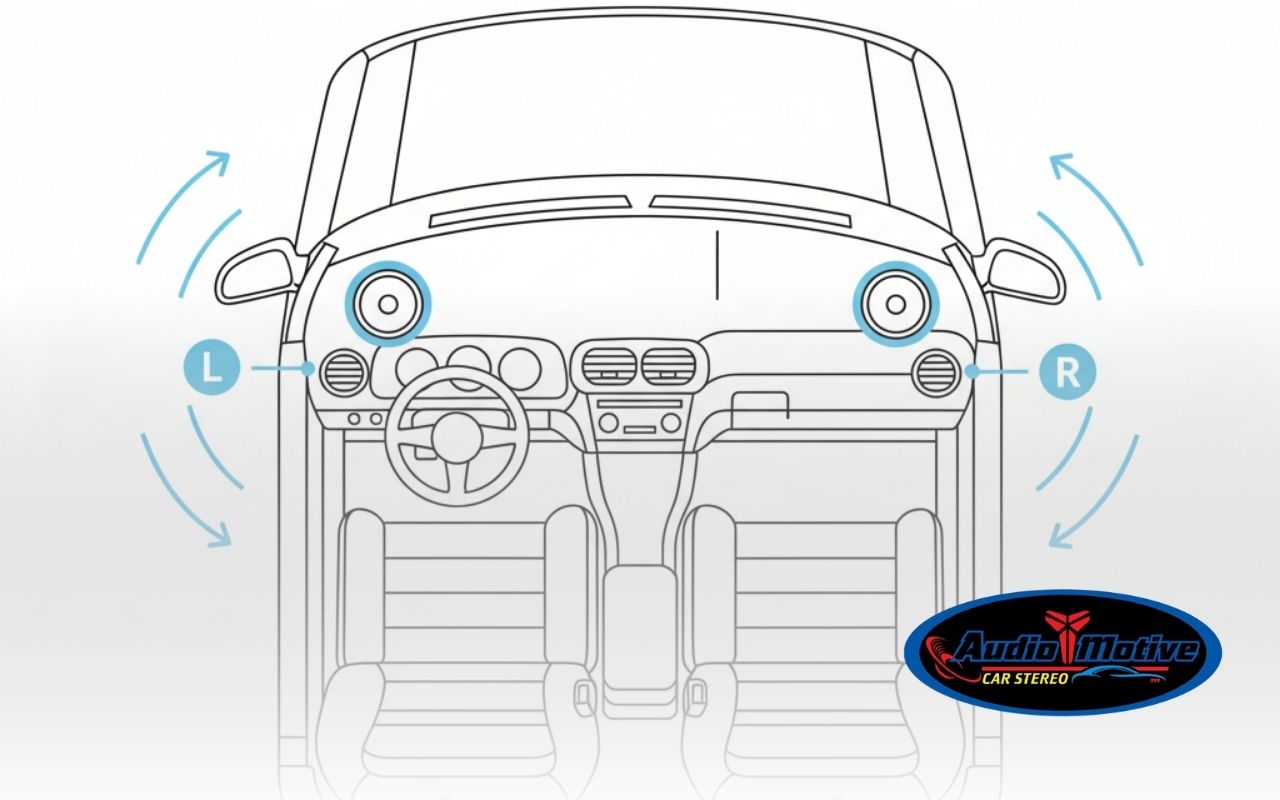
Finding the right balance in your audio setup can feel like cracking a secret code. However, many “flat” setups come down to small placement choices. With Soundstage for beginners, you can learn why music sometimes wraps around you, yet other times it feels stuck in the speakers.
Moreover, once you understand tweeter placement and off-axis vs on-axis listening, results come faster. By adjusting tweeter angles and using crossover slopes tips, you can hear more depth and width. Whether you use bookshelf speakers or a home theater, these basics help you get richer sound.
Understanding Soundstage in Simple Terms
Learning Soundstage for beginners starts with picturing how sound fills space around you. In other words, imagine an invisible stage where voices and instruments “stand.” When it works well, you hear width left to right, plus depth front to back. As a result, music feels more real and less boxed in.
Also, placement matters. Try a quick A/B test with a familiar track. Move your seat slightly forward, backward, or to the side. Then listen for changes in width and depth. Over time, these small moves teach you how your room shapes the sound picture.
- Play one track you know well
- Move your seat in small steps
- Notice how voices and instruments shift
- Repeat until the image feels natural
Tweeter Placement That Brings Out Detail
Good tweeter placement can unlock cleaner highs and sharper detail. Since tweeters handle high notes, placement affects vocals, cymbals, and strings. Therefore, aim to keep tweeters near ear height and pointed toward your main listening spot. This often makes the stage feel clearer and more open.
Next, try a mild “toe-in,” meaning a slight inward angle. Start small, then listen from your best seat. If highs sound sharp, reduce the angle. If highs sound dull, increase it. For a fuller system plan, review how to choose car audio system components and apply the same matching mindset at home.
- Keep tweeters close to ear level
- Angle speakers slightly inward
- Adjust in small steps, then re-listen
- Balance detail with comfort
Off-Axis vs On-Axis Listening Explained
Off-axis vs on-axis describes where you sit compared to the speaker face. On-axis means you sit directly in line with the speakers, so highs feel most direct. Off-axis means you sit a bit to the side, so highs soften. Consequently, on-axis can sound more detailed, while off-axis can feel easier for long sessions.
Still, each room is different. If you hear too much sparkle, shift slightly off-axis. If you want more bite and focus, return closer to on-axis. Likewise, if you are planning a full system change, matching an amp to a speaker can help you keep balance across the whole setup.
- On-axis: more detail and direct highs
- Off-axis: smoother tone and less bite
- Choose a middle spot for shared seating
- Recheck after any placement change
Crossover Slopes Tips for Smoother Blending
Crossover slopes tips help you blend drivers without gaps or bumps. A crossover splits sound so each driver plays what it handles best. A steeper slope hands off faster, while a gentler slope overlaps more. As a result, the “best” choice depends on your speakers and your room.
So, if your gear allows it, test different settings and listen for a smooth middle range. If the handoff sounds uneven, try another slope and compare again. Additionally, a careful install matters, so explore car audio installation principles for clean routing and solid mounting habits that reduce noise and shake.
Maximize Your Room for a Bigger Stage
To support Soundstage for beginners, give your speakers space to breathe. First, pull them a foot or two from walls to reduce bounce-back sound. Also, use a rug or soft items between the speakers and your seat to calm echoes. These simple steps can sharpen the sound image.
Moreover, avoid large objects in the direct sound path. A clear center area often improves focus. If you need help with placement and aiming in a real setup, consider car stereo installation in Fremont, CA style planning as a model for clean layout and smart angles.
Frequently Asked Questions
What is Soundstage for beginners, in one sentence?
Soundstage for beginners is the skill of arranging your setup so music feels wide, deep, and placed in space.
How do I know if my tweeter placement is wrong?
If vocals lack clarity, cymbals feel muted, or highs seem to “float” oddly, adjust height and aim.
Should I listen on-axis all the time?
Not always. On-axis can be more detailed, yet off-axis can be smoother for long listening sessions.
Do crossover settings really change the soundstage?
Yes. When the driver handoff is smoother, the image usually feels more stable and natural.
What’s the fastest tweak for better soundstage?
Start with toe-in and spacing from walls. Then re-listen with a familiar track and note changes.
Simple Tweaks That Improve Clarity
Small changes can bring big gains. For example, add isolation pads, reduce loose vibrations, and adjust angles one step at a time. Then compare using a track with clear vocals and wide effects. Over time, these tweaks stack up, and Soundstage for beginners becomes easier to build.
Finally, if you want a second opinion from Audiomotive, use the Audiomotive contact page to discuss placement goals and next steps for your system.