
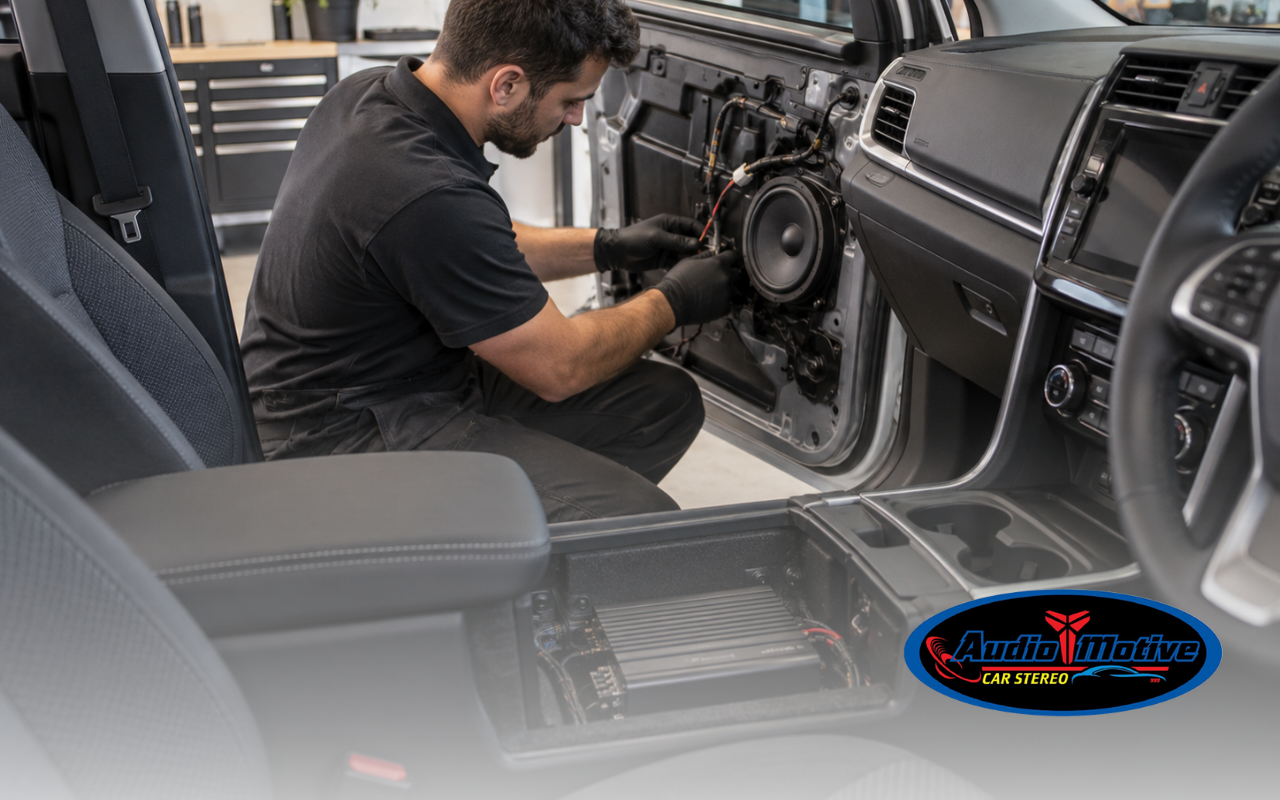
Better sound does not need to place heavy demands on your vehicle’s electrical system. Eco-friendly car audio solutions combine smart component choices, careful power use, and clean installation to create enjoyable sound while using less energy.
At Audiomotive, we guide Bay Area drivers toward upgrades that match their vehicles and listening goals. For EV and hybrid owners, efficiency matters because every added electrical component uses part of the vehicle’s available energy.
How Efficient Car Audio Systems Use Less Power
A more efficient audio system starts with connected choices. The amplifier, speakers, wiring, materials, and power features all affect energy use. A balanced setup focuses on sound quality while avoiding extra parts that add power demand without clear benefit.
Our approach to eco-friendly car audio solutions is simple. We choose what your vehicle needs, match components correctly, and install them carefully. This supports better efficiency without limiting the system.
Modern Amplifiers Deliver Strong Sound With Less Waste
The amplifier supplies power to the speakers, so its design matters. Class D amp efficiency ratings often show why these models are common in modern systems. They usually use power well and create less heat than many older amplifier designs.
Lower heat can reduce the need for large cooling parts. As a result, many Class D amplifiers are compact and easier to fit in tight spaces. However, the amplifier still needs to match the speakers and the vehicle’s electrical capacity.
Digital Processing And Smart Power Reduce Energy Waste
A digital signal processor, or DSP, lets us adjust sound balance, crossover points, and timing. When DSP functions are built into an amplifier, fewer separate parts may be needed. Low-power DSP amplifiers in 2026 can support precise tuning without creating an overly large system.
Smart power features also matter. Standby modes, auto shut-off, and load sensing can reduce unnecessary draw when music is not playing. These features can make eco-friendly audio systems more practical for daily driving while keeping power use under better control.
Lighter Components Support Cleaner, More Practical Installations Today
Compact amplifiers, lighter speaker parts, and simple wiring can reduce material use and protect cabin or cargo space. At Audiomotive, we also consider durability, sound quality, compatibility, and safe mounting so efficiency does not come at the cost of practical use.
- Properly matched speakers and amplifiers
- Compact, energy-efficient components
- Safe wiring and correct circuit protection
- Power features that reduce idle draw
- Careful tuning for the vehicle and driver
EVs And Hybrids Need Careful Audio Power Planning
Energy-efficient car audio for EVs and hybrids should be planned around the specific vehicle. Speakers with suitable sensitivity, matched amplifiers, and smart power control can help limit unnecessary demand on the electrical system. Our EV audio upgrade guide explains this process further.
The goal is not simply to choose the smallest parts. Instead, eco-friendly car audio solutions should deliver the sound you want without drawing more power than needed.
- Your preferred sound and bass level
- Available electrical power
- Existing parts that can stay
- Standby and efficiency features
- Space and installation limits
Thoughtful Installation Keeps Efficient Systems Working Properly Daily
Good installation supports both safety and efficiency. Proper wire size, secure connections, suitable fusing, and careful component placement help power move through the system safely. Clean wire routes can also reduce clutter and avoid needless resistance.
Our car audio installation process focuses on safe integration and practical placement. With green car audio installs, we also avoid unnecessary vehicle changes when the existing layout can support the system.
- Short, practical wire routes
- Secure amplifier mounting
- Correct fuse placement
- Space-saving component locations
- Tuning based on real listening needs
Frequently Asked Questions
What makes car audio more eco-friendly?
Eco-friendly car audio solutions use efficient amplifiers, matched speakers, smart power features, and thoughtful installation. The goal is to reduce wasted energy while keeping sound clear and enjoyable.
Are Class D amplifiers good for efficient systems?
Yes. Class D models often use power efficiently and create less heat. However, the right choice still depends on speaker needs and vehicle capacity.
Can EVs handle upgraded car audio?
Many can, but each vehicle is different. We review system demand and compatibility before recommending parts for an EV or hybrid.
Do lighter components always save more energy?
Not always. Lower weight can help with space and material use, but efficiency also depends on power draw, tuning, and component matching.
Can I see examples of completed installations?
Yes. You can view our installation gallery for examples of custom audio work and practical system layouts.
Plan A Cleaner Car Audio Upgrade With Confidence
At Audiomotive, you get practical system planning backed by more than 15 years of installation experience. We help drivers compare speakers, amplifiers, subwoofers, and power features without adding equipment they do not need.
If you are considering eco-friendly car audio solutions, our team can help plan a setup that fits your vehicle, sound preferences, and efficiency goals. Well-planned eco-friendly audio systems can balance enjoyable sound, practical energy use, and long-term value. Contact us to discuss a more efficient upgrade.