
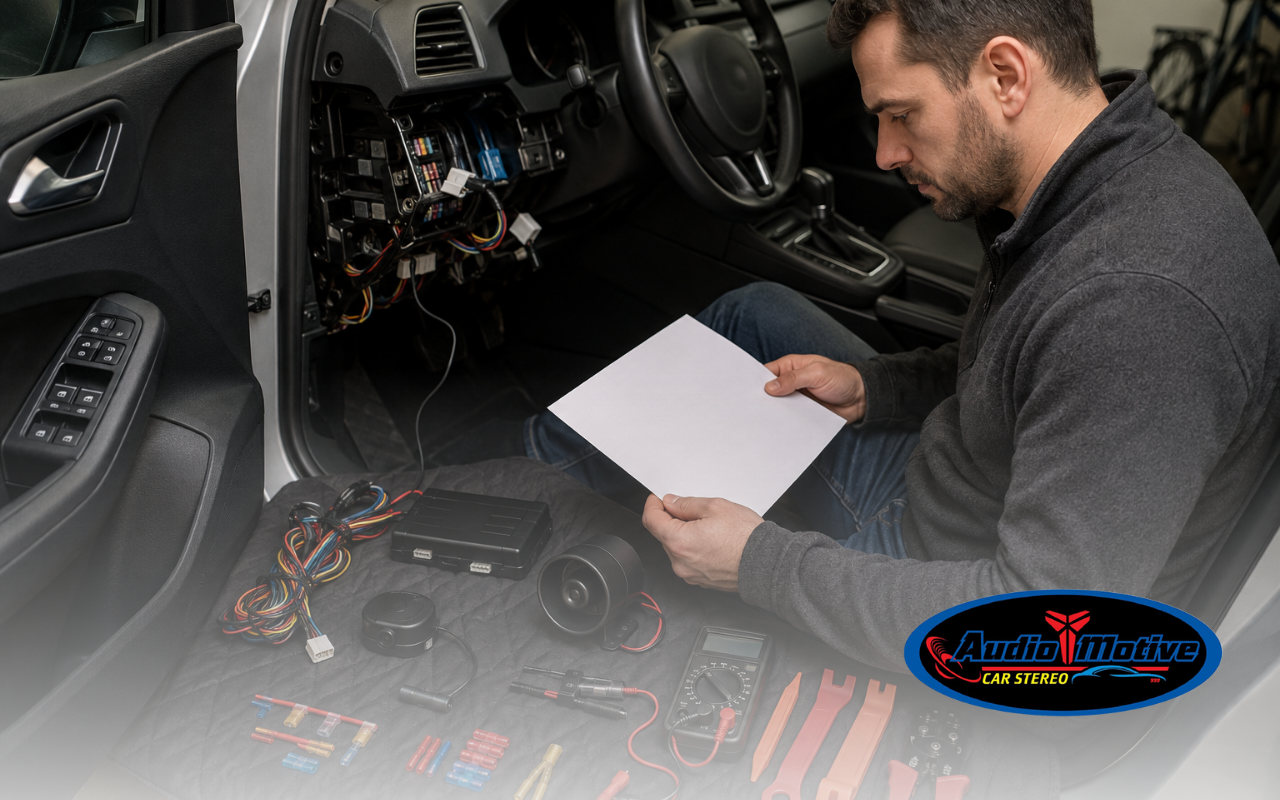
DIY car alarm installation can save labor and help you learn more about your vehicle. For drivers who understand basic wiring, the project can offer more control over alarm placement, sensors, and setup.
However, newer cars use factory immobilizers, keyless entry, push-start systems, and digital networks. At Audiomotive, we know one wrong connection can cause false alarms, weak protection, or electrical issues, so careful planning matters.
Know When Installing Your Own Alarm Makes Sense
DIY car alarm installation is possible when you have the right tools, clear instructions, and some experience with vehicle electronics. Older cars are often easier because their wiring is simpler and may use direct trigger wires.
Newer vehicles can need extra modules, programming, or vehicle-specific steps. Before starting, compare the alarm instructions with your car’s year, model, ignition type, and factory security system. If anything is unclear, professional support can prevent mistakes.
Compare Common Alarm Types Before Choosing Your System
Basic wired alarms connect the control unit, siren, sensors, and power through physical wires. Simplified systems may reduce wiring, while advanced products can add smartphone control, remote start, or integration with factory locking features.
Modern keyless push-start alarm compatibility is especially important. A system may appear suitable but still need an interface module or special programming. Our vehicle electronics services can help you understand which setup fits your car.
Check CAN Bus Modules and Vehicle Compatibility First
Many modern vehicles use a CAN bus network so electronic parts can share information. Because of this, 2026 CAN bus bypass modules may be needed for door status, ignition signals, locks, or factory immobilizer functions.
Before beginning DIY car alarm installation, confirm these details:
- Your exact vehicle year, make, and model
- Push-start and factory keyless entry support
- Required interface or bypass module
- Alarm maker compatibility and programming needs
Protect Wiring, Sensors, and the OBD-II Connection
A typical system can include a control module, siren, door and trunk triggers, a shock sensor, wiring, and remote controls. Every connection should be secure, insulated, and kept away from pedals, sharp edges, heat, and moving parts.
OBD-II port security risks also deserve attention because this connection can access important vehicle systems. Some owners add a port cover or lock as another layer of protection. An alarm works best as part of a broader vehicle security plan.
- Hide the alarm control module carefully
- Set shock sensors to avoid false triggers
- Secure wiring so connections cannot loosen
- Protect diagnostic access when appropriate
Follow Safe Steps During Alarm Installation and Testing
DIY car alarm installation should follow the alarm maker’s instructions and the vehicle maker’s safety guidance. Read the manual, gather the correct tools, and identify each circuit with a multimeter instead of trusting wire color alone.
After connecting the system, program remotes or interface modules before replacing interior panels. Then test arming, door triggers, trunk triggers, shock response, siren output, factory lock control, and smartphone functions when supported.
- Plan component locations before connecting wires
- Use proper tools and secure connectors
- Avoid unfamiliar airbag or safety circuits
- Test every function before final reassembly
Recognize Problems That Make DIY Systems Less Reliable
False alarms can come from loose wiring, wrong trigger inputs, poor sensor placement, or sensitivity set too high. A system that will not arm may have a weak ground, incorrect ignition connection, programming problem, or compatibility issue.
These problems explain why DIY alarms fail on 2026+ vehicles when owners guess at digital wiring or skip vehicle-specific setup. With Audiomotive, we focus on correct integration, clean placement, and complete testing rather than trial and error.
Frequently Asked Questions
Can beginners install a car alarm themselves?
Yes, but the vehicle matters. DIY car alarm installation in an older car may be manageable for someone comfortable with basic wiring. Complex electronics, push-start systems, or factory immobilizers can make professional installation safer.
Do newer cars need a CAN bus module?
Some do. The correct module depends on the vehicle and alarm. Always check the manufacturer’s compatibility information before buying or connecting any interface.
Why does a DIY alarm trigger falsely?
Common causes include loose wiring, poor sensor placement, an incorrect trigger connection, or a shock sensor set too high. Testing each part separately can help locate the problem.
Can push-start vehicles use aftermarket alarms?
Often, yes. However, the alarm and interface must support the vehicle’s factory electronics. Some systems also require programming before they work correctly.
What tools are useful for installation?
Common tools include trim tools, screwdrivers, wire strippers, crimpers, connectors, electrical tape, zip ties, and a multimeter. Vehicle-specific wiring information may also be necessary.
Choose Professional Security When Your Vehicle Needs More
DIY car alarm installation can be rewarding, but newer vehicles leave less room for guesswork. Advanced wiring, immobilizers, remote start features, and data networks can turn a small mistake into a larger electrical or security problem.
At Audiomotive, we handle wiring, sensor placement, system integration, programming, and final testing with the vehicle in mind. For dependable guidance, contact our team about your security setup. We can explain the safest next step for your car.