
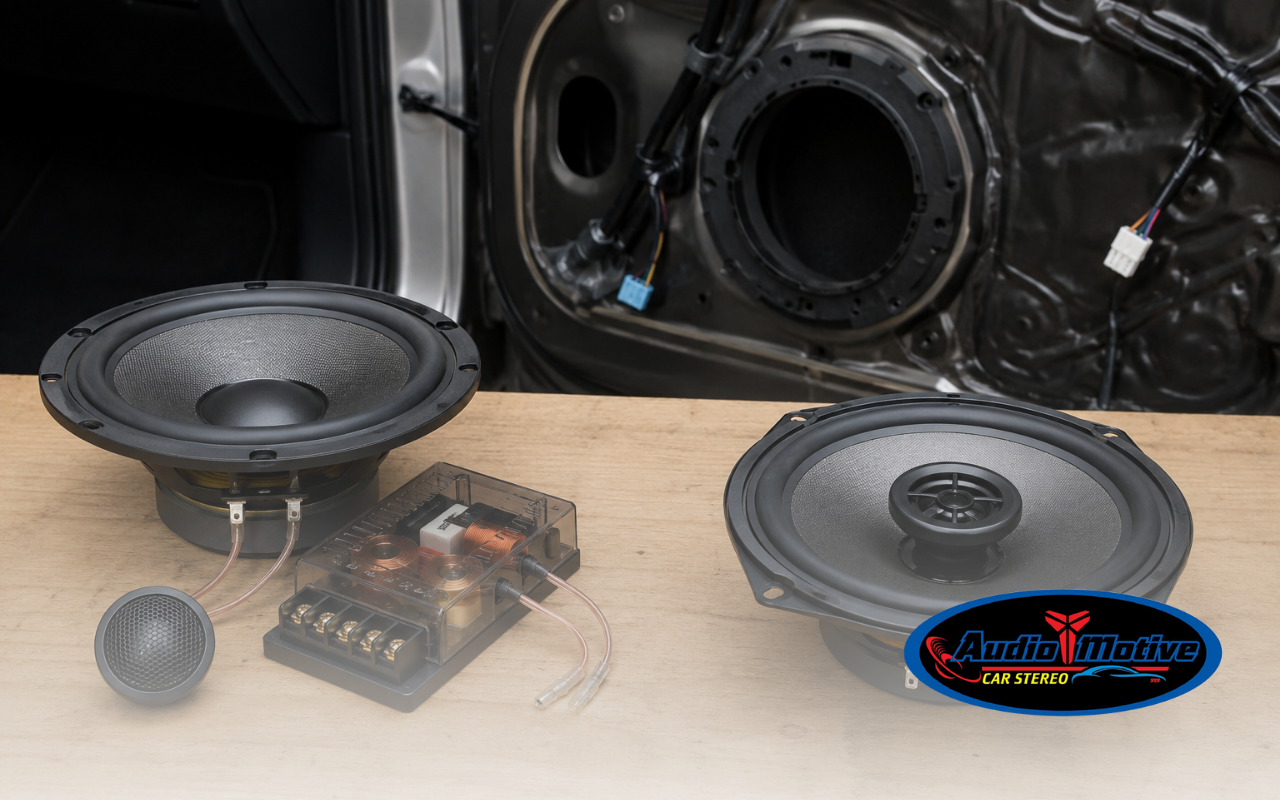
Component speakers vs coaxial car speakers can shape how every song feels inside your vehicle. Both can improve factory audio. At Audiomotive, we help drivers choose a setup that fits their music and vehicle.
Component systems separate key speaker parts for more control, while coaxial models combine them in one unit for simpler use. This guide explains sound quality, setup, and flexibility so you can choose with confidence.
How Component Speakers Create Clearer Detailed Car Audio
Component speakers use separate woofers and tweeters. The woofer handles lower tones, while the tweeter handles higher sounds. A crossover sends each range to the correct speaker. Because the parts work separately, the system can produce cleaner detail and better balance.
Placement matters. Tweeters can sit closer to ear level, while woofers stay in doors. This design can improve the coaxial vs component soundstage by making voices and instruments feel more focused across the cabin.
- Separate drivers support clearer sound.
- Flexible placement can improve music direction.
- Crossovers guide the correct frequencies.
Why Coaxial Speakers Make Upgrades Simple and Practical
Coaxial speakers combine a woofer and tweeter in one speaker. That design makes them easier to fit into many factory locations. For drivers who want better sound with fewer parts, they can be a practical choice.
In a car speaker upgrade comparison, coaxial models often stand out for convenience. They need less wiring and fewer mounting points. However, they provide less control over placement and tuning than components.
Soundstage Differences That Change Your Daily Listening Experience
Component speakers vs coaxial car speakers differ clearly in how sound spreads through the cabin. A component setup can place higher sounds closer to the listener, creating a wider and more natural front soundstage. Music can feel more open and better separated.
Coaxial speakers still deliver balanced sound, especially when replacing weak factory speakers. Their sound comes from one main location, so the stage may feel more direct. At Audiomotive, we consider your cabin layout before suggesting an approach.
- Components can create stronger left-to-right separation.
- Coaxials can improve factory sound with fewer changes.
- Vehicle layout affects both speaker types.
Installation Needs for Each Speaker Upgrade Style Today
Speaker upgrade installation is usually more involved with component systems. The woofer, tweeter, and crossover each need secure placement and clean wiring. Some vehicles may also need adapters or panel changes.
Coaxial installation is often simpler because one unit replaces the factory speaker. Still, correct fit and secure connections matter. Our professional car audio installation services can help create a clean setup without avoidable rattles or loose wiring.
Customization Options for Drivers Who Want More Control
Drivers who enjoy fine tuning often prefer component speakers. Separate tweeters allow better placement, while crossovers and amplifiers can support more detailed adjustments. This flexibility helps match the system to personal music preferences.
The best 6.5 component speakers 2026 may also suit drivers planning future upgrades. Coaxial speakers offer less physical flexibility, but equalizer settings and careful mounting can still improve the result. Component speakers vs coaxial car speakers should be judged by your goals, not complexity alone.
Practical Factors Before Choosing Your New Car Speakers
Before choosing, think about how you listen, how much change your vehicle can support, and whether you may add an amplifier later. A simple daily system may work well with coaxials, while a sound-focused build may benefit more from components.
At Audiomotive, we also check speaker size, factory locations, and system condition before planning an upgrade. For local support, review our car audio installation in San Leandro service and see our vehicle-specific approach.
- Consider your normal listening volume.
- Check available mounting space.
- Plan for future audio upgrades.
Frequently Asked Questions
Are component speakers always better than coaxial speakers?
Not always. Components usually give more control and separation, but coaxials can be better for drivers who value easy installation and dependable daily sound.
Do component speakers need a separate amplifier?
No. Many can run from a compatible head unit, although an amplifier may improve output and clarity when the system is matched correctly.
Can coaxial speakers replace factory speakers directly?
Often, yes. Many fit factory openings, but size, depth, connectors, and mounting points should still be checked before installation.
Which option gives a wider front soundstage?
Component systems often create a wider front stage because tweeters can be placed higher and closer to the listener.
How should I compare speakers before buying?
Compare fit, sound goals, installation needs, power handling, and future plans. A good car speaker upgrade comparison should focus on your vehicle.
Pick Speakers That Match Your Driving Sound Goals
Component speakers vs coaxial car speakers is ultimately a choice between added control and simpler installation. Components suit listeners who want detail, flexible placement, and deeper tuning. Coaxials suit drivers who want a clean improvement with fewer parts.
With Audiomotive, we focus on the system that makes sense for your vehicle and listening style. If you are still comparing component speakers vs coaxial car speakers, get in touch with us for car audio guidance and we can discuss a practical next step.