
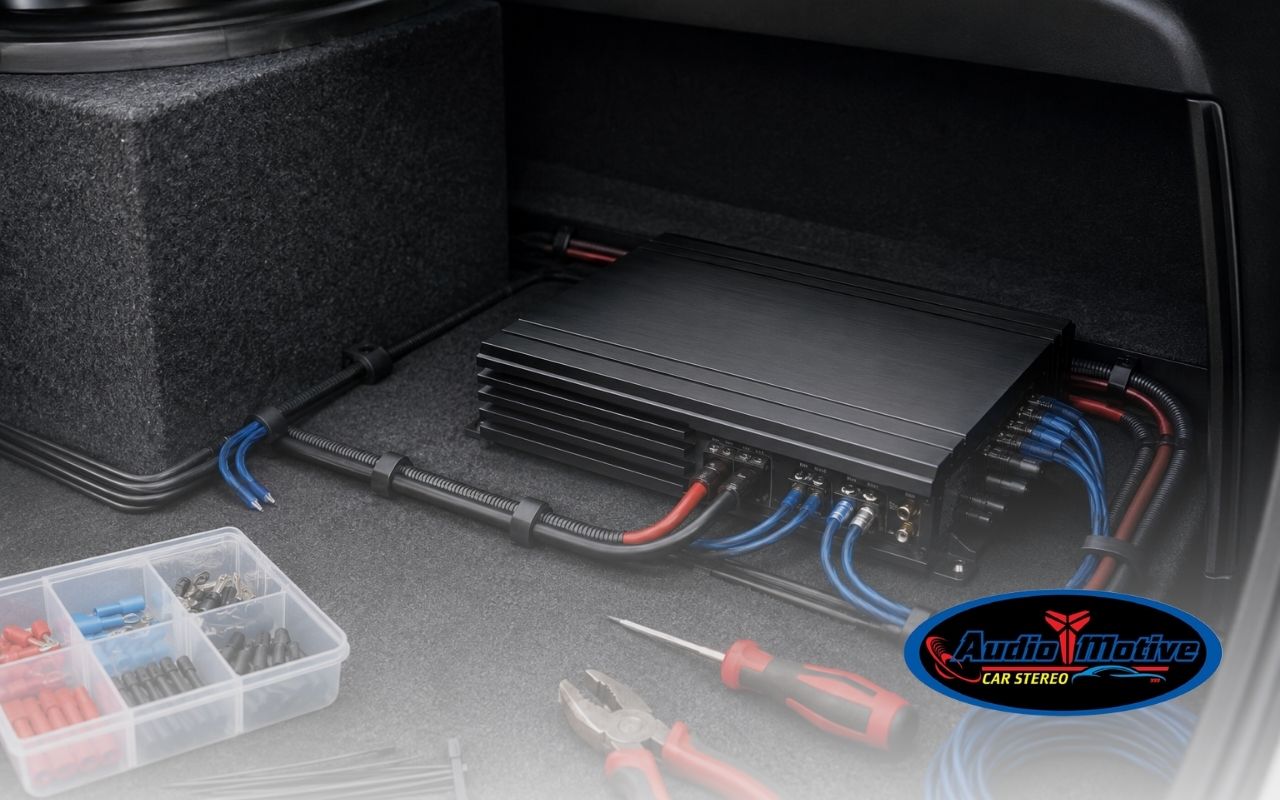
Car amplifier installation can turn weak factory sound into clear music with stronger bass and better detail. Many drivers want this upgrade, but they also worry about wires, power, and noise problems.
At Audiomotive, we believe the process should feel clear from the start. Therefore, this guide explains safe steps, common errors, and simple choices that help your audio system sound better on every drive.
Better Amplifier Power Changes Your Music Experience
An amplifier gives your speakers more power, so music sounds louder and cleaner without harsh noise. As a result, bass feels fuller, voices sound clearer, and your system works with less strain.
However, power must match your speakers. Too little power can cause weak sound, while too much power can damage parts. A careful setup helps your system play strong and stay safe.
Choose An Amplifier That Matches Your Speakers
The right amplifier depends on your speaker power, subwoofer needs, and future plans. First, check the RMS rating on your speakers. Then, match the amplifier output close to that number for steady sound.
- Pick a channel count that fits your speakers and subwoofer.
- Check the ohm rating before connecting a subwoofer.
- Leave room for future upgrades when it makes sense.
For more help with wire size, review our guide on choosing the right amp wire size. This step can prevent heat, weak power, and poor sound.
Tools And Wiring Parts Worth Preparing First
Before you begin car amplifier installation, gather the right parts. This keeps the work smooth and reduces delays. A full wiring kit should include power wire, ground wire, RCA cables, speaker wire, and a fuse holder.
- Wire cutters, strippers, and a crimping tool
- Socket set, screwdrivers, and panel tools
- Zip ties, tape, grommets, and a voltage tester
Our team at Audiomotive also recommends checking your vehicle layout before removing panels. Therefore, you can avoid tight spaces, sharp metal, and poor mounting spots.
Plan Safe Cable Routes Before Any Connection
A safe layout helps protect your car and your sound. Run the power wire from the battery through a protected firewall opening. Also, keep it away from sharp edges, hot areas, and moving parts.
Signal wires should stay away from power wires when possible. This helps reduce hum and unwanted noise. In addition, choose an amplifier spot with airflow, easy access, and enough space for secure mounting.
How To Install Car Amplifier Wiring Safely
To learn how to install car amplifier wiring, start by disconnecting the negative battery terminal. Then, place the fuse holder near the battery before connecting the main power wire.
Next, connect the ground wire to clean bare metal near the amp. Good contact matters because car amp grounding issues can cause noise, weak power, or shutdowns. After that, connect RCA cables, speaker wires, and the remote turn-on wire.
Common Mistakes That Hurt Sound And Safety
Many amplifier wiring mistakes happen because the setup is rushed. For example, loose wires, poor fuse placement, and crossed signal cables can create noise or damage. Careful checks help protect your system.
- Never skip the fuse near the battery.
- Avoid grounding to painted or dirty metal.
- Do not run signal wires beside power wires.
- Check speaker polarity before testing sound.
When customers contact Audiomotive, we explain the safest next step before work begins. For full system support, visit our car audio setup service page.
Frequently Asked Questions
Can I install an amplifier without changing speakers?
Yes, you can add an amp to factory or aftermarket speakers. However, the power must match the speakers to avoid damage and harsh sound.
Where should I place the amplifier in my car?
Common spots include the trunk, under a seat, or behind a panel. The best place has airflow, secure mounting, and safe cable access.
Why does my amplifier make a humming noise?
Humming often comes from poor grounding, loose RCA cables, or power wires too close to signal wires. Checking these areas usually finds the problem.
Is a bigger power wire always better?
Not always. The wire should fit the amp power and cable length. The correct size helps prevent heat, voltage loss, and weak output.
When should I ask a professional for help?
Ask for help when wiring feels unclear, panels are hard to remove, or the system keeps shutting off. Safe work protects your vehicle and audio parts.
Get Cleaner Sound With Trusted Installation Support
Car amplifier installation takes planning, clean wiring, and careful testing. With the right steps, your system can sound stronger, clearer, and more balanced without unwanted noise.
With Audiomotive, you get clear guidance before the work begins. Therefore, drivers who want safe car amplifier installation can reach us through our contact page for audio support.