
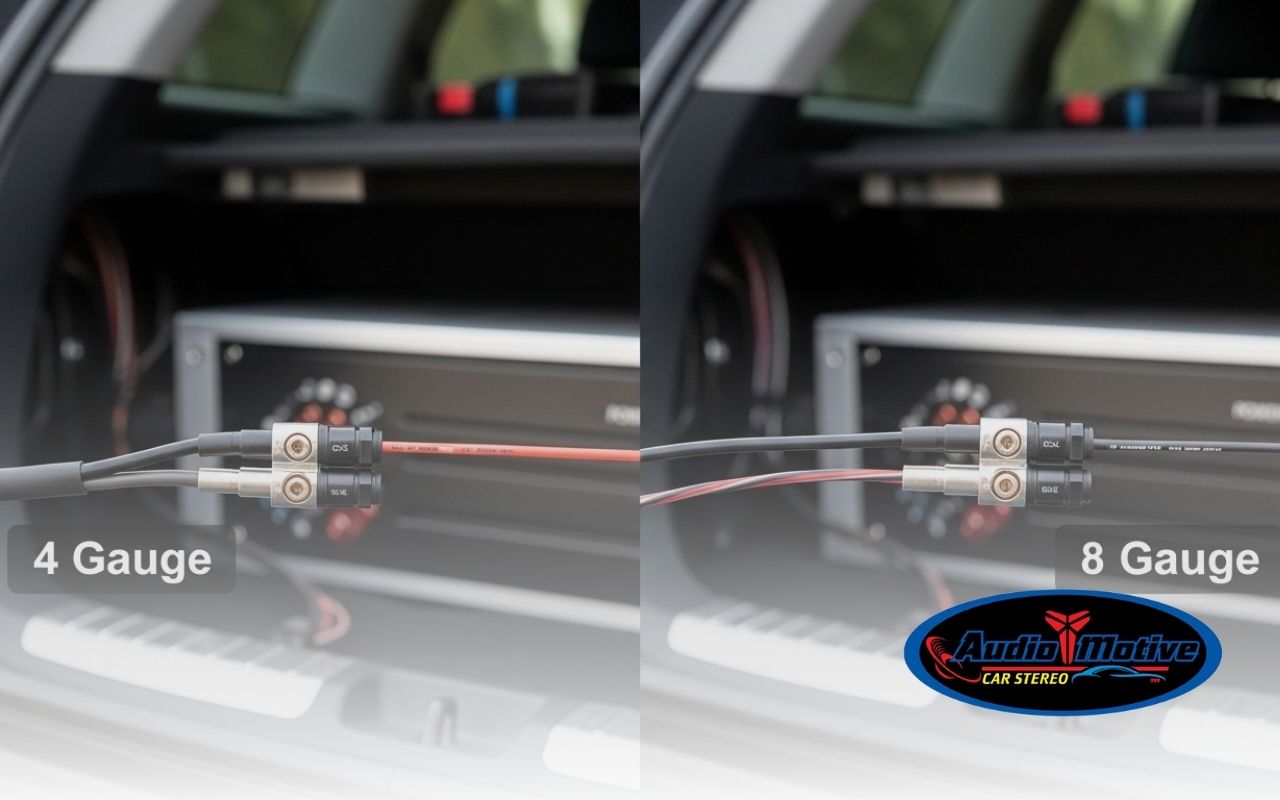
Choosing the right amp wire for your car can feel confusing at first, yet it plays a big part in sound quality, safety, and system strength. When your wiring matches your setup, your music sounds better and your vehicle stays protected.
In this guide, Audiomotive explains the basics in simple terms. We will help you compare wire size, current needs, and fuse protection so you can choose the right option for your car audio system with more confidence.
Start With Your Car Amp Power Needs
Before you choose a wire size, check how much power your amplifier uses in your car. The right cable helps your system stay stable and lowers the risk of heat, weak output, and voltage loss while you drive.
When comparing 4 gauge vs 8 gauge amp wiring, stronger car audio amplifiers usually need thicker cable. That extra thickness helps move current more easily from the battery to the amp, especially in vehicles with higher-power sound systems.
How Wire Gauge Affects Car Audio Output
Wire gauge refers to cable thickness. A lower number means a thicker wire, so 4 gauge wire carries more current than 8 gauge wire. In a car, that matters because your amplifier depends on steady battery power for clean sound.
Thicker wire lowers resistance and helps reduce voltage drop. Audiomotive often sees better bass control and cleaner playback when the cable size fits the real needs of the car audio system instead of being chosen by guesswork.
Why Vehicle Wire Length Changes Everything
The distance from your car battery to the amplifier matters more than many drivers expect. Longer wire runs create more resistance, so a cable that works under a seat may not perform as well in a trunk-mounted amp setup.
That is why a 4ga vs 8ga wire choice should always include total run length. In larger vehicles or trunk installs, thicker wire helps keep voltage more stable when your car stereo system is working hard.
Using an Amp Current Draw Chart for Cars
An amp current draw chart gives you a simple way to match your amplifier with the right cable size in a vehicle. It helps remove guesswork and makes it easier to build a car audio setup that performs well every day.
- Check the amplifier’s continuous current draw before peak numbers.
- Measure the full wire run from the car battery to the amplifier.
- Compare both numbers to see whether 8 gauge or 4 gauge makes more sense.
When you use an amp current draw chart with real install length, you get a more accurate answer. This is very useful for cars with subwoofers, multi-channel amps, or upgraded car audio amplifiers.
Choosing the Right Fuse for Car Wiring
Fuse protection is just as important as cable size in any vehicle. A proper fuse helps protect the wire if there is a short, while the wrong fuse can leave your car wiring exposed to damage or repeat failures.
Your fuse size should match the wire capacity and the amplifier’s needs. Audiomotive recommends placing the main fuse close to the battery so the power wire in your car has protection as early as possible.
- Choose a fuse that matches the wire, not only the amp.
- Place the main fuse near the positive battery connection.
- Replace loose holders or worn terminals before they cause trouble.
For more help, visit our car amplifier installation guide and our tips on grounding car amplifiers.
Clean Car Installation Makes a Big Difference
Both wire sizes need careful routing inside the vehicle. You still need solid terminals, safe pass-through points, and secure mounting, but 4 gauge wire usually needs a bit more room behind trim panels and through firewall openings.
Good results also depend on the rest of the wiring path. Make sure your remote turn-on wiring works properly and keep power wire away from sensitive signal cables inside the car.
Common Car Wiring Mistakes to Avoid
Many car audio problems start with small mistakes. Some people choose cable by guess, ignore wire length, or install the wrong fuse. Those errors can lead to poor sound, hot wires, dimming lights, or amplifier shutdown.
- Do not size wire by amplifier wattage alone.
- Do not forget to measure the full path across the vehicle.
- Do not ignore the condition of the battery and charging system.
We also recommend checking your car battery and charging system, because weak vehicle power can hurt amplifier performance even with the correct cable size.
Frequently Asked Questions
Is 8 gauge wire enough for every car amplifier?
No, 8 gauge is not enough for every car amplifier. It can work in lower-power systems and shorter runs, but stronger amps or longer wire paths in a vehicle often need thicker cable.
When should I use 4 gauge wire in my car?
You should usually use it when your amplifier draws more current, the amp is mounted farther from the battery, or you want room for future upgrades in your car audio system.
Can wire size change how my car stereo sounds?
Yes, it can. When your amp gets stable voltage from the vehicle battery, bass sounds tighter and playback stays cleaner, especially when the system plays louder music.
Does fuse size matter as much as wire gauge in a car?
Yes. The right fuse size is a key part of safe car wiring. It helps protect the cable and vehicle if a short or fault happens in the power line.
Where can I get help with my car audio wiring?
If you want direct help, contact Audiomotive through our contact page. We can help you choose wiring that fits your car and amplifier setup.
Make the Best Choice for Your Vehicle
Choosing 4 gauge vs 8 gauge amp wiring depends on amplifier demand, vehicle wire length, and long-term reliability. In many stronger car systems, 4 gauge is the better choice because it supports cleaner power delivery and more stable performance.
If you are comparing 4 gauge vs 8 gauge amp wiring for your next upgrade, Audiomotive is here to help. Audiomotive wants every vehicle audio system to sound strong, stay safe, and fit the way you enjoy music on the road.