Choosing the right audio solution for your car can feel mind-boggling, especially with Line Output Converter vs DSP. Whether you want to keep the charm of your factory head unit or improve sound without a full rebuild, the right choice matters. Both aim for pristine audio, but they work in different ways.
With Audiomotive, you can match your goals to the right tool. A line output converter takes a simple path to get a clean signal. Meanwhile, DSP OEM integration takes an advanced path by shaping the sound in detail. In the end, the best pick depends on how much control you want.
Understanding a Line Output Converter
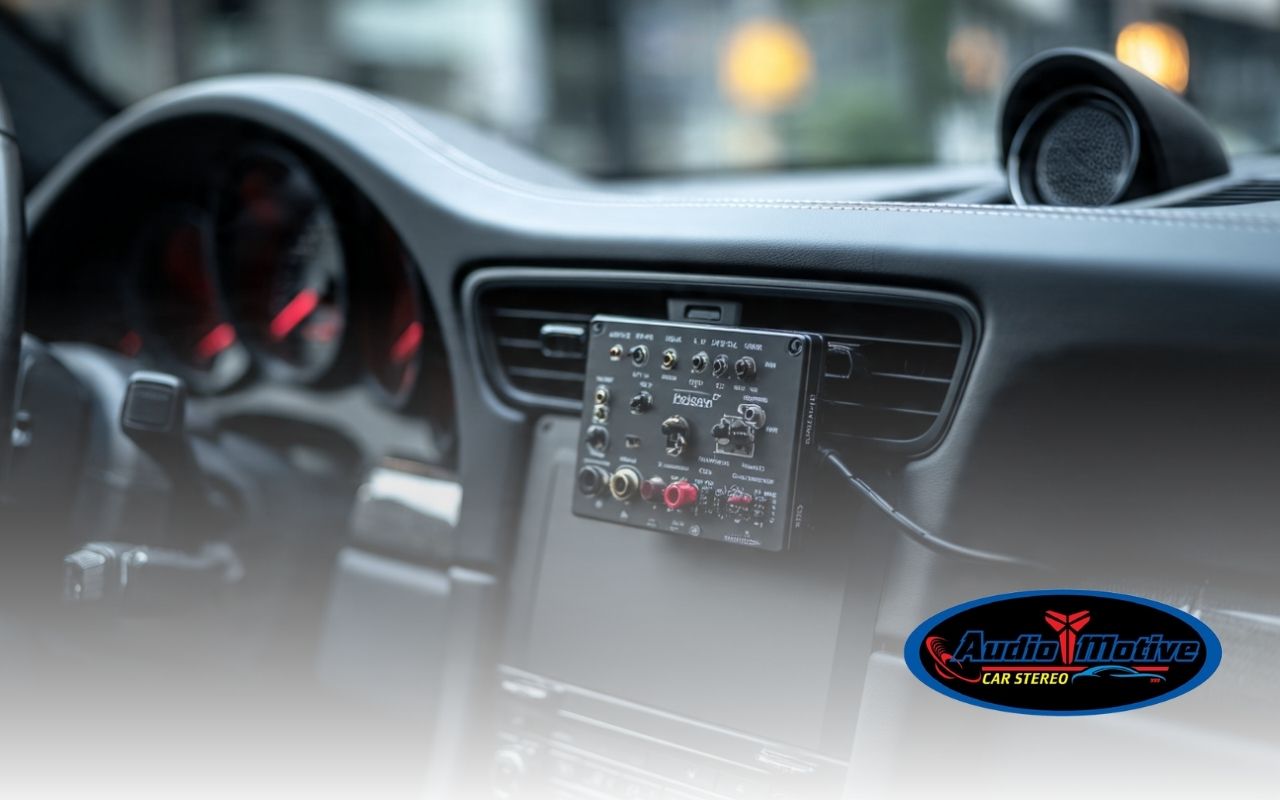
Audiomotive often recommends a line output converter for a smart first upgrade. This small device taps the factory head unit’s speaker outputs. Then it turns them into low-level RCA signals for aftermarket amplifiers. As a result, you can retain factory head unit features and avoid major wiring changes.
In addition, a line output converter helps create a clean signal car audio path from your current setup. Inside, it reduces speaker voltage and helps limit noise. While it will not shape tone like a DSP, it connects stock electronics to aftermarket power with less effort.
Benefits of a Line Output Converter
For many drivers, Audiomotive sees these as the biggest wins when using a line output converter. It keeps your dash looking original, and it also supports fast upgrades. Moreover, it is a practical step if you want extra power without changing everything.
- Helps you retain factory head unit controls and features.
- Supports a clean signal car audio feed to an amplifier.
- Often includes basic noise filtering for a quieter system.
- Fits behind the dash or in the trunk with minimal space use.
Limitations of a Line Output Converter
Even so, Audiomotive explains that a line output converter is mainly an adapter. It does not offer deep tuning tools. Therefore, if you want detailed control of the soundstage, you may outgrow it.
- No advanced EQ shaping for specific frequency issues.
- No time alignment to fix speaker timing and imaging.
- No custom crossovers for complex multi-speaker setups.
- Lower-end units can add noise or small phase changes.
Exploring Digital Signal Processors
A DSP takes car audio further than a basic adapter. Audiomotive uses DSP OEM integration to help drivers upgrade without losing factory features. The processor sits between the head unit and amplifiers, then gives software control over key sound settings.
With a laptop or app, you can adjust equalization, timing, and crossovers. Because of that, a DSP can better match your speakers to your cabin. So, if you want a more tuned and balanced sound, a DSP offers tools a converter cannot.
Advantages of a DSP
When Audiomotive installs a DSP, the main goal is precision. You can tune the system to your taste and your car’s acoustics. In addition, many units work well with factory systems, which helps you retain factory head unit usability.
- Detailed EQ control for smoother highs and tighter bass.
- Time alignment to improve imaging and staging.
- Custom crossovers for better speaker protection and blend.
- Strong dsp oem integration support in many modern setups.
Drawbacks of a DSP
However, a DSP can feel like a bigger project. Audiomotive notes that wiring can be more complex, and tuning takes time. Also, the learning curve can be steep if you are new to audio tuning.
- More wiring steps and more channels to manage.
- Tuning requires software, and results depend on skill.
- Some setups need extra space for mounting and routing.
- Many owners choose professional install and calibration.
How to Choose Between Them
Choosing Line Output Converter vs DSP starts with your goal. If you want to add an amp quickly and keep the factory look, a line output converter is a strong fit. It can help you keep a clean signal car audio feed and avoid changing the dash.
On the other hand, if you want control over tone, timing, and speaker blending, a DSP is the better tool. Audiomotive often suggests thinking about your budget, your time, and your comfort with tuning. Then you can pick the option that matches your plan.
Quick Installation Overview
Audiomotive sees many owners start small and then upgrade later. So, it helps to know what each install typically looks like. Although every vehicle is different, these steps outline the usual workflow.
- Line output converter: connect to speaker wires, run RCA cables to the amp, set gain, then test for distortion.
- DSP: mount the unit, connect inputs and outputs by channel, power it, then tune EQ, time, and crossovers in software.
Frequently Asked Questions
What is the main purpose of Line Output Converter vs DSP?
A line output converter adapts speaker-level signals to RCA for an amp. A DSP shapes and controls the sound with tuning tools, often through software. Audiomotive helps match the choice to your goals.
Can I retain factory head unit controls with both options?
Yes. In most cases, both options let you retain factory head unit features. However, dsp oem integration may require careful channel routing and tuning to work at its best.
Which option is better for a clean signal car audio setup?
Both can support a clean signal car audio path. Yet a high-quality converter is key for simple builds, while a DSP can also clean and correct the signal while improving balance and staging.
Do I need a DSP if I only want to add a subwoofer?
Not always. A line output converter is often enough for a subwoofer add-on. Still, Audiomotive may suggest a DSP if you want tighter blending with the front stage and better bass control.
Is DSP OEM integration worth it for factory systems?
It can be, especially if you want tuning control without swapping the head unit. With dsp oem integration, you can keep factory usability while improving staging, EQ, and overall clarity.
Next Steps for Your Upgrade
If you want a simple bridge to an amplifier, start with a line output converter. If you want full tuning control, consider a DSP. For hands-on help, Audiomotive can guide you based on your vehicle, goals, and current system.
To explore professional options, visit Audiomotive car audio installation. If you are planning a full build, review how to choose car audio system components. When you are ready to map your setup, reach Audiomotive through the contact page.